
Musrara, Jerusalem: Real Estate Guide and Apartment Prices 2026
Updated: November 2026 | Data: 2024 – June 2026 sales (nadlan.gov.il), Yad2 listings as of Nov 2026 | By Amir Azraf, Amirim Real Estate Solutions
In short: Musrara (officially Morasha) is a small historic neighborhood between downtown Jerusalem and the Old City. Prices have held steady for three years: a typical apartment sells for ₪42,000–48,000 per registered square meter, and a standard 3–4-room apartment for ₪3.3–4.1 million. What changed is volume. 2025 was a record year; in 2026 activity fell back to 2024 levels, and buyers are pickier.
Musrara is small and sees few sales each year, so every figure here should be read with care, especially price per square meter. Below I explain why.
A note for buyers from abroad: Israeli listings count rooms including the living room, so a “3-room” apartment usually has 2 bedrooms. Prices are in shekels (₪), as they are registered and traded. 1 m² ≈ 10.76 sq ft.
What Does an Apartment in Musrara Cost in 2026?
A standard 3–4-room apartment in Musrara sells for ₪3.3–4.1 million. These are representative sales from the first half of 2026 (source: nadlan.gov.il, the Israeli government’s real estate transaction database):
| Apartment | Registered size | Price | Price per registered m² |
|---|---|---|---|
| 3 rooms | 72 m² (775 sq ft) | ₪3.35M | approx. ₪46,500 |
| 3 rooms, 21 Ha’Ayin Het St. | 83 m² (893 sq ft) | ₪4.13M | approx. ₪49,700 |
| 4 rooms | 80 m² (861 sq ft) | ₪3.28M | approx. ₪40,900 |
| 3 rooms | 90 m² (969 sq ft) | ₪3.6M | approx. ₪40,000 |
| 3 rooms, Shivtei Israel St. (outlier) | 104 m² (1,119 sq ft) | ₪6.85M | approx. ₪65,900 |
The Shivtei Israel sale is an outlier. Don’t base a price estimate on it.
Is Shivtei Israel Street More Expensive?
Shivtei Israel Street trades at the upper end of the range, but four sales are not enough to prove a fixed premium. Sales on the street (source: nadlan.gov.il):
- Dec 2024: 1 room, 34 m², ₪1.4M (approx. ₪41,200/m²)
- May 2025: 3 rooms, 50 m², ₪3.0M (approx. ₪60,000/m²)
- Oct 2025: 3 rooms, 100 m², ₪4.8M (approx. ₪48,000/m²)
- Feb 2026: 104 m², ₪6.85M (approx. ₪65,900/m²)
I tell buyers and sellers the same thing: the price follows the property, not the street name.
How Many Homes Sold in Musrara in 2024–2026?
Musrara recorded 17 sales in 2024, 32 in 2025 and 9 in the first half of 2026. The median price per registered square meter stayed between ₪42,000 and ₪48,000 throughout.
| Period | Reported sales (all types) | Open-market apartment sales analyzed | Median price per registered m² |
|---|---|---|---|
| 2024 | 17 | 12 | approx. ₪44,400 |
| 2025 | 32 | 20 | approx. ₪42,600 |
| Jan–Jun 2026 | 9 (annualized: approx. 18) | 6 | approx. ₪48,100 (approx. ₪43,700 excluding two outliers) |
(Source: nadlan.gov.il, “Morasha-Musrara” neighborhood; analysis by Amirim Real Estate Solutions, Nov 2026. The median includes regular apartment sales only. Excluded: land, offices, partial-rights and intra-family transfers, implausible sizes, and properties over 200 m².)
What the table shows:
- 2025 was an exception. 32 sales is almost double 2024.
- 2026 is back to the 2024 pace. Annualized, that is roughly 44% fewer sales than 2025.
- Prices did not fall. The median stayed in the ₪42,000–48,000 per registered m² range in all three periods.
- 2026 data will still change. No sales were reported on the government site after 27 Aug 2026. Israeli sales are reported with a delay, so some 2026 deals are not yet listed.
In a market like this, prices hold but buyers take their time. Sellers who price right sell. Sellers who price to the record year wait.
Why Price per Square Meter Misleads in Musrara
In Musrara, registered size and actual size often differ sharply, so price per square meter is only a rough guide. This happens across Jerusalem (see my guide to valuing a Jerusalem apartment when size data conflicts), but in Musrara it is especially acute, and it shows in the data:
- A 2-room apartment registered at 23.5 m² sold for ₪2.015M.
- A 1-room apartment of 44.8 m² sold for ₪2.25M.
- A 234 m² basement unit sold for ₪800,000.
- The Feb 2026 Shivtei Israel sale appears as 104 m² on the government site and 80 m² on Madlan (a leading Israeli listings site). That is ₪65,900/m² by one source and ₪85,600/m² by the other, for the exact same deal.
What causes the gaps?
- Unregistered additions: galleries, basements, rooftop rooms, enclosed balconies and courtyards.
- Messy land registration: buildings never registered as a condominium (bayit meshutaf), or held in undivided shares, where each owner holds a share of the whole property rather than a defined apartment.
- Thick stone walls: in an old Arab-style house, the gap between gross and net area is far larger than in a new building.
How to Price a Musrara Property Correctly
To price a property in Musrara correctly, you need:
- An up-to-date Tabu extract (the official Land Registry record of ownership, liens and rights).
- The condominium order and floor plan (tashrit), if the building is registered as one.
- The municipal building file and permits, to know what is legal and what is not.
- An actual on-site measurement.
- A like-for-like comparison: Arab house to Arab house, 1950s block to 1950s block.
Musrara Apartments for Sale: What’s on the Market Now?
Yad2, Israel’s main classifieds site, currently lists 28 properties in Musrara (Nov 2026). That is a lot against 15–30 sales a year.
About half are regular apartments. Their median asking price is about ₪47,000 per built square meter. That figure can’t be compared directly with sale prices, which are per registered square meter. Representative listings:
- 4 rooms, 75 m² (807 sq ft), Daniel St.: ₪3.55M
- 3-room garden apartment in a listed (preserved) building, 92 m² (990 sq ft), Mishmarot St.: ₪4.1M
- 3 rooms, 89 m² (958 sq ft), HaNevi’im St.: ₪4.5M
- 4 rooms, 130 m² (1,399 sq ft), Elisha St.: ₪5.0M
- Renovated 4.5 rooms with roof, 131 m² (1,410 sq ft), Shivtei Israel St.: ₪7.6M
The rest are luxury listings at ₪7–20 million. In 2025–2026 no sale above about ₪7.3M was recorded in the neighborhood. The most extreme listing is a private house on its own plot on HaNevi’im Street: 6 rooms, 219 m² (2,357 sq ft), asking ₪20M (about ₪91,000/m²). That price reflects the land and the rarity of a private house in the city center, not the neighborhood’s price level.
More on asking price vs. sale price in Jerusalem. In Musrara the gap is widest at the top end.
Musrara Neighborhood Guide: What Makes It Different?
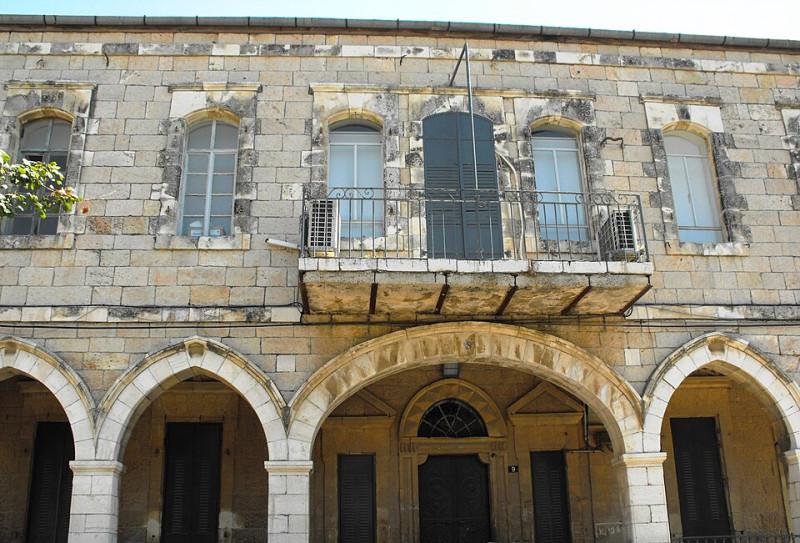
Musrara (Morasha) is a small historic neighborhood between downtown and the Old City, with preserved Arab-style stone houses and building limits designed to protect its character. It was founded in the 1880s outside the Old City walls, facing Damascus Gate, by well-off Arab Christian families. After 1948 it became a border neighborhood on the city’s dividing line. The houses were subdivided and settled by new immigrants, mostly from North Africa. In 1971 the Israeli Black Panthers protest movement was founded here. Since the 1980s the neighborhood has gradually renewed, and the municipality restricted demolition, extra floors and additions to protect its fabric (source: Jerusalem Post, “Beyond the border”).
Today Musrara is a residential and arts neighborhood, home to the Musrara Naggar School of Art. It sits between downtown Jerusalem, Safra Square (City Hall), the Old City, Mamilla and Mea She’arim. Few Jerusalem neighborhoods offer a historic stone house within walking distance of all of these.
Musrara, Personally
Musrara is personal for me. My grandparents’ home was at 18 Shivtei Israel Street, and my memories of it are of warmth and family. The neighborhood held its rabbi, Rabbi Yehia Shneor, in great respect, and my grandfather served him. His son, Rabbi Prosper, officiated at my wedding 30 years ago.
What Kind of Homes Are in Musrara?
There are two main building types:
- Original Arab-style stone houses: high ceilings, arches and courtyards. Most were subdivided into several units with several owners.
- 1950s–60s public housing blocks (shikunim): simpler construction, and usually cleaner registration.
The neighborhood is small. Population estimates range from about 2,500 residents (Hamichlol) to about 4,500 (Wikipedia, citing the Jerusalem Municipality). We found no official count of housing units. At 3–3.5 people per household, our estimate is about 750–1,500 units.
Which Streets Are in Musrara?
The government real estate site assigns 18 streets to the neighborhood, including HaNevi’im, Shivtei Israel, Ha’Ayin Het, Mishmarot, Daniel, Heleni HaMalka, Ido HaNavi, Elisha and HaHoma HaShlishit.
Advice for Sellers in Musrara
- Price to sales, not to listings. Supply is high and buyers compare. A property priced above the range will simply sit.
- Get your paperwork in order before listing. Tabu extract, permits and a fresh measurement. A buyer who discovers an unregistered addition on their own will use it in negotiation.
- Show what no other neighborhood has. High ceilings, arches, a courtyard and proximity to the Old City and downtown justify a price only when they are presented properly.
That is where a structured property marketing plan comes in, and often shared exclusivity, which puts the property in front of every relevant broker.
Advice for Buyers, Israeli or from Abroad
- Check the registration before you fall for the arches. A property held in undivided shares, or with part of its area unpermitted, can make a mortgage harder to get and a future sale harder to close. Bring in mortgage consulting before you sign.
- Don’t pay for square meters that don’t exist in the Tabu without understanding the risk.
- Compare like with like. An apartment in a preserved building and one in a 1950s block are two different products, even on the same street.
- Buying from abroad: a historic stone house within walking distance of the Old City is a rare asset, but checking the registration matters even more when you are not in the country. You can tour Jerusalem properties in one focused week and plan how exchange rates affect buying from abroad.
Professional buyer representation in Jerusalem runs these checks before you sign, not after.
Bottom Line: Musrara Real Estate in 2026
Musrara prices are stable, activity is down, and supply is high. A regular apartment sells for ₪42,000–48,000 per registered square meter, and a 3–4-room apartment for ₪3.3–4.1 million. In a neighborhood of historic houses and complex registration, price per square meter is only a starting point. Real value is set by the documents, the measurement and the right comparison.
Thinking of buying or selling in Musrara? I’d be glad to sit down with you over the numbers for your specific property, in person in Jerusalem or by video call.
Amirim Real Estate Solutions | 2 Ahad Ha’am St., Jerusalem | +972-54-647-6577 | Contact us
This page is general market information, not an appraisal. For the value of a specific property, consult a licensed real estate appraiser.
Frequently Asked Questions About Musrara
How much does a 3-room apartment in Musrara cost?
In 2026, regular 3-room apartments in Musrara sold for ₪3.35–4.13 million, depending on size, condition and street (source: nadlan.gov.il). There were outliers, such as ₪6.85 million on Shivtei Israel Street, but they don’t represent the market. A specific apartment needs a comparison with properties of the same building type.
Did apartment prices in Musrara fall in 2026?
No. The median price per registered square meter stayed between ₪42,000 and ₪48,000 in 2024, 2025 and the first half of 2026 (source: nadlan.gov.il). What fell was the number of sales: about 44% fewer on an annualized basis than in the record year of 2025. Buyers are pickier, but prices have not eroded.
Why do price-per-square-meter figures differ so much between websites?
Because the size itself is reported differently. The same Feb 2026 Shivtei Israel sale appears as 104 m² on the government site and 80 m² on Madlan, which gives anywhere from ₪65,900 to ₪85,600 per m² for the same deal. Unregistered additions, messy registration and thick stone walls create large gaps.
What should I check before buying in an old Arab-style house in Musrara?
The Tabu extract, the condominium order and floor plan, and the municipal building file with permits. Check whether the property is held in undivided shares and whether it has unpermitted additions. Also measure the apartment on site, because all of these affect the price, the mortgage and a future sale.
Is Musrara a good investment?
Musrara offers a rare location between downtown and the Old City, and a stock of historic houses where building is limited for preservation. On the other hand, the market is small with few sales, and supply is currently high. It suits buyers looking for a unique long-term asset who check the registration carefully. It is less suited to those looking for a quick profit.
Do homes above ₪7 million sell in Musrara?
In 2025–2026 no sale above about ₪7.3 million was recorded in the neighborhood (source: nadlan.gov.il), even though Yad2 lists properties at ₪7–20 million. Those are asking prices not yet proven by sales. A private house on its own plot is a rare case, and its value comes mainly from the land.
About the author: Amir Azraf is the founder of Amirim Real Estate Solutions and Vice Chairman of the Jerusalem Real Estate Brokers Association, with 16 years of experience in the Jerusalem market. His grandparents’ home was in Musrara. Book a consultation
More central Jerusalem neighborhoods: Rehavia | Baka | Talbiyeh
